The Golden Era Bodybuilding Diet: A Blueprint for Muscle and Meticulous Joint Care
The Golden Era of bodybuilding, from the 1960s to the 1980s, was defined by athletes who followed strict diets to achieve iconic physiques. This article explores the core nutritional principles of that era, highlighting how a focus on whole foods and pioneering supplement use supported massive muscle growth and long-term joint health. Understanding this legacy provides valuable lessons for modern athletes seeking sustainable strength.
The Foundation: Discipline on a Plate
The legends of the Golden Era—Arnold, Franco, Zane—understood that the gym was only half the battle. The other half was fought in the kitchen, with a fork as their weapon. Their diets were a masterclass in discipline, where every meal was a calculated step toward their physical peak.
While consuming large amounts of protein from whole food sources was non-negotiable for muscle growth and recovery, the most successful athletes embraced a more holistic view. They recognized that the punishing high-volume training regimens of the era placed tremendous stress on the body’s framework—the joints and connective tissues. Their nutritional strategies, often intuitive, were designed to fortify this foundation against damage and wear-and-tear.
This wasn’t just about eating chicken and rice; it was about the quality and variety of foods that provided a spectrum of nutrients. They were building a resilient system, not just visible muscle.
The Strategic Use of Food and Supplements
The use of supplements was a key part of the regimen for many top-tier bodybuilders, though the market was far simpler than today. They leveraged emerging science to gain an edge, particularly with branched-chain amino acids (BCAAs) to aid recovery and reduce muscle protein breakdown during intense training bouts.
However, it’s crucial to contextualize this. BCAAs were a tactical tool, but the bedrock of their protein intake remained whole foods like steak, eggs, and fish. A common modern critique is that BCAAs are inferior to consuming a complete protein source, which provides all essential amino acids necessary for optimal repair and growth. The smartest approach, then and now, prioritizes whole foods and uses BCAAs strategically if needed.
Beyond muscle, their dietary patterns inadvertently supported joint health in powerful ways:
- Whole-Food Anti-Inflammatories: Their diets were rich in omega-3 fatty acids from sources like fish and eggs. These fats are now scientifically recognized for their role in promoting a healthy inflammatory response, which can help manage pain and stiffness.
- Vitamins and Minerals for Structure: Adequate calcium and vitamin D from dairy and eggs were crucial for maintaining strong bone density, the anchor for healthy joints.
- Intuitive Connective Tissue Support: Many athletes consumed collagen-rich foods like bone broth and gelatin, intuitively supporting the cartilage cells that provide crucial cushioning for joints.
Validating the Legacy with Modern Science
What these pioneers practiced through observation is now supported by clinical research. We can now see the biochemical wisdom behind their dietary choices.
For example, a 2006 study published in the journal Osteoarthritis and Cartilage found that a group of men and women with osteoarthritis who took 1,500 mg of MSM (Methylsulfonylmethane) daily for 12 weeks saw significant improvements in pain and physical function compared to a placebo group.
Furthermore, extensive research has linked omega-3 fatty acids to reduced inflammation, benefiting both post-menopausal women and people with autoimmune conditions like rheumatoid arthritis. This scientific backing confirms that the anti-inflammatory nature of the Golden Era diet was on the right track for sustaining long-term health.
Building Your Modern Golden Era Diet
Adopting this philosophy today means focusing on principles, not just mimicking meals.
Get your nutritional foundation right:
| Nutrient | Golden Era Principle | Modern Application |
|---|---|---|
| Protein | 1+ gram per pound of bodyweight | Prioritize whole sources: chicken, lean beef, eggs, fish, whey/casein protein. |
| Fats | Don’t fear healthy fats | Avocado, olive oil, nuts, and fatty fish (Salmon) for Omega-3s. |
| Carbohydrates | Fuel for performance | Oatmeal, rice, potatoes, whole grains timed around workouts. |
For supplements, quality and purpose are key. Look for products that undergo third-party testing for purity and potency.
Strategic Supplements for the Modern Lifter:
- Omega-3 Fatty Acids: A high-quality fish oil supplement (1-3g of EPA/DHA daily) is one of the most well-researched supports for inflammatory health.
- Vitamin D3: Essential for those with limited sun exposure, working synergistically with calcium for bone health.
- Glucosamine & Chondroitin: While results can vary individually, some research suggests they may help maintain cartilage health. It is always advised to consult with a doctor for persistent joint pain.
- BCAAs/EAAs: Can be useful during fasted training or prolonged exercise, but should not replace a diet adequate in complete protein.
The Enduring Legacy
The golden era bodybuilding diet was a comprehensive system for building a powerful and resilient body. Its focus on whole foods, strategic supplementation, and overall health provides a timeless blueprint. By learning from their methods, we can build impressive strength while investing in the longevity of our joints. The true golden era of your physical development isn’t in the past—it’s waiting for you to get started.
The Golden Era Nutrition & Joint Health Cheat Sheet (DOWNLOAD)
Your one-page guide to building muscle and protecting your joints, the classic way.
This table distills the core principles of the Golden Era bodybuilding diet into an actionable plan for the modern athlete. Focus on whole foods, strategic timing, and key nutrients for sustainable gains.
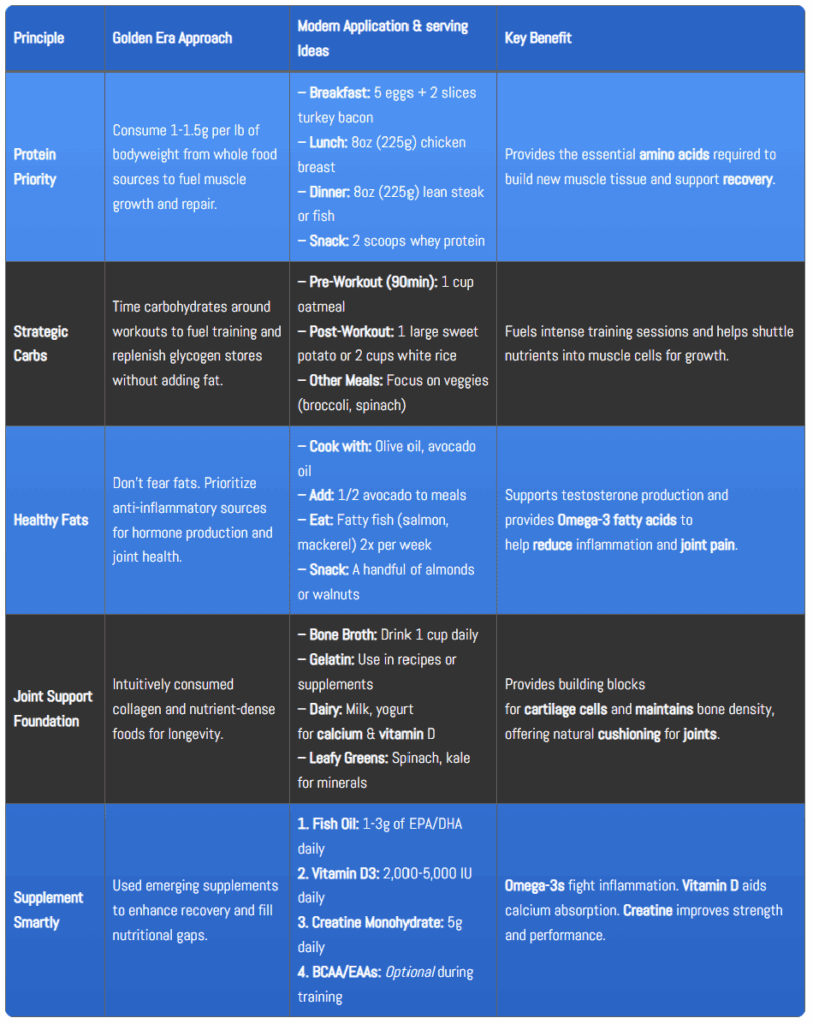
Key Takeaway: The goal isn’t complexity; it’s consistency. Build your plates around a protein source, a smart carb, a healthy fat, and plenty of vegetables. This time-tested approach builds a powerful, resilient physique designed to last.
Disclaimer: This cheat sheet is for informational purposes only and is not medical advice. Always consult with a healthcare professional before making significant changes to your diet or supplement regimen.