Triceps training is the non-negotiable foundation for men seeking to build substantial arm size and upper body strength. This guide delivers a nuanced, science-backed approach to targeting the triceps brachii, moving beyond basic exercises to stimulate maximum growth through progressive overload—the principle of gradually increasing stress on the muscles by adding weight, reps, or sets over time. We will dissect the anatomy, expose common pitfalls, and provide a clear blueprint for transforming your arm development.
The Arm’s Unsung Hero: Why Your Triceps Are 2/3 of the Equation
Let’s clear the air on a fundamental truth you might feel but haven’t fully articulated. That stubborn plateau in your arm measurements? The reason your sleeves don’t carry the authority you want? It’s likely not your biceps. It’s your triceps.
Anatomically, the triceps brachii makes up approximately two-thirds of your upper arm mass. The very name—triceps—means three heads. This is not a single muscle to be hammered with endless pushdowns. It’s a complex engine responsible for extending the elbow, and each head requires deliberate attention. Focusing here is the difference between having arms and owning commanding arms. This is where the real architectural change happens.
Deconstructing the Three-Headed Muscle: A Practical Guide
To train the triceps intelligently, you must understand its components. Think of this not as boring biology, but as an operator’s manual for your own body.
- Long Head: The largest of the three. It originates on the scapula, giving it a role in shoulder extension. This is the head that creates that coveted horseshoe shape and adds major mass to the back of the arm. It is best targeted when your arm is overhead.
- Lateral Head: The star of the show for that rugged, diamond-like appearance on the side of your arm. It is predominantly fast-twitch fiber dominant, responding best to heavy loads and explosive effort.
- Medial Head: The workhorse. It lies deeper and provides stability during all pressing movements. While it works in every triceps exercise, it’s crucial for lockout strength.
This breakdown isn’t just academic; it’s the key to your programming. A workout that only involves pushdowns (elbows at your sides) completely neglects the unique function of the long head. You’re leaving a significant portion of your potential arm size on the table.
Primary Functions of the Triceps Heads
| Triceps Head | Primary Function | Best Stimulated By |
|---|---|---|
| Long Head | Elbow Extension, Shoulder Extension | Exercises with arms overhead (e.g., Overhead Extensions) |
| Lateral Head | Elbow Extension | Heavy compound presses and cable pushdowns |
| Medial Head | Elbow Extension (Stabilizer) | All triceps movements, especially lockouts |
The Nuance-Driven Training Blueprint
Forget the mindless rep counting. The quality of each contraction is the secret variable that separates generic effort from transformative results.
1. The Mind-Muscle Connection: Your Internal Compass
This is the cerebral side of training. Can you feel the stretch and squeeze in the target muscle, or are you just moving weight? To engage the triceps fully, you need to create intentional tension. Before you even unrack the weight, visualize your triceps doing the work. On a pushdown, imagine pushing your elbows through the wall behind you. On an overhead extension, feel the deep stretch in the long head before powerfully contracting. This neural focus recruits more muscle fibers, leading to superior growth.
2. The Critical Role of Full Range of Motion
Partial reps have their place for overloading, but for triceps development, the full stretch is non-negotiable. The long head is fully stretched only when the arm is elevated or the elbow is flexed deeply. Controlled eccentric lowering—taking 2-3 seconds to lower the weight—creates microscopic muscle damage that is a primary driver of hypertrophy. Don’t cheat yourself by cutting the movement short.
3. Exercise Selection: A Strategic Hierarchy
Not all exercises are created equal. Structure your workouts like a strategic campaign.
- Primary Mass Builders (Overhead Movements): These are non-negotiable for attacking the long head.
- Barbell/Dumbbell Skull Crushers (Lying Triceps Extensions): The king of triceps mass-builders. The angle provides a profound stretch. Focus on keeping your elbows fixed and pointing toward the ceiling.
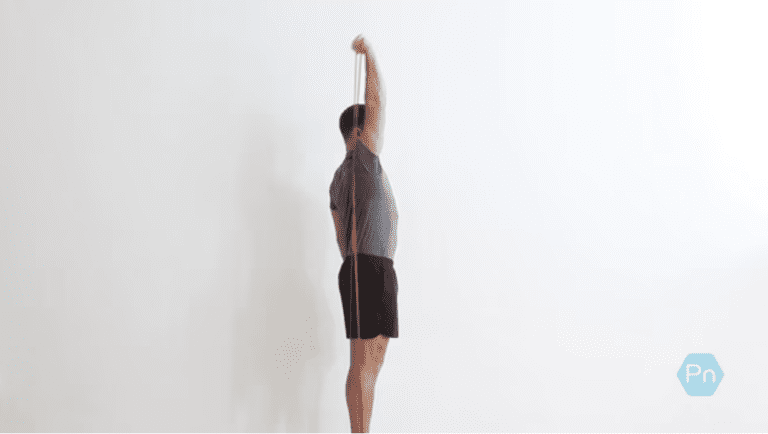
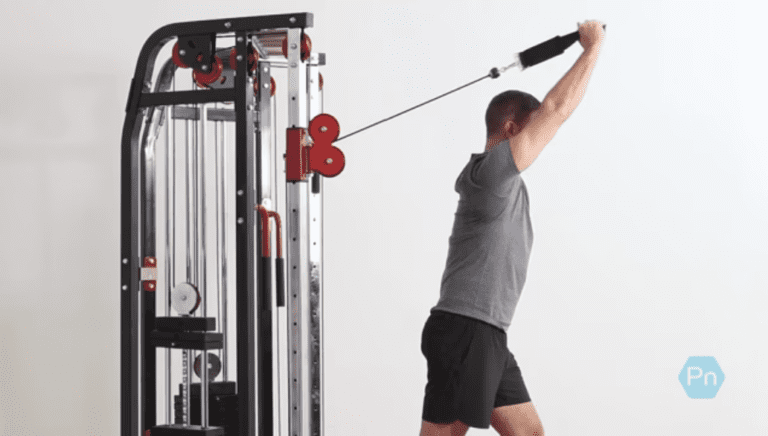
- Overhead Dumbbell or Cable Extensions: The single-best movement for isolating the long head. The overhead position places it under immediate tension.
- Striking and Finishing Moves (Elbows-at-Sides Movements): These hone the lateral head and build that diamond detail.
- Cable Pushdowns (V-Bar/Rope): A staple for a reason. The constant tension from the cable is unparalleled. Avoid using momentum; keep your elbows glued to your sides.
- Dips (Weighted or Bodyweight): A fantastic compound movement. Lean your torso forward slightly to increase triceps engagement over chest.
Crafting Your Arsenal: A Sample Workout Structure
This is not a one-size-fits-all plan, but a template you can adapt. The principle is to train with purpose, not just volume.
The Hypertrophy Focus Session
- Compound Press: 3 sets of 6-8 reps (e.g., Close-Grip Bench Press)
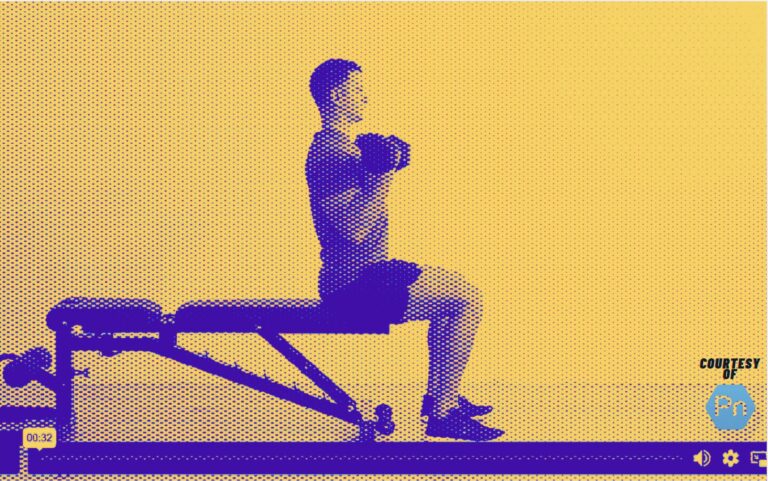
- Overhead Extension: 3 sets of 8-12 reps (e.g., Seated Dumbbell Overhead Extension)
- Isolation Finisher: 3 sets of 10-15 reps (e.g., Rope Pushdown)
The Non-Negotiable Principle: Form Over Weight
Chasing numbers with sloppy form is a direct route to injury and stalled progress. The triceps are connected to the elbow joint, which is vulnerable to inflammation from poor technique. The mind-muscle connection and full range of motion are always more important than the weight on the bar. Hypertrophy occurs from the target muscle being effectively stressed, not from heaving momentum.
The Technique Cues to Live By:
- Tempo: Control the negative (eccentric) for 2-3 seconds, explode on the concentric (lifting) phase.
- Elbow Position: This is everything. Where your elbows go, the weight follows. Keep them stable and isolated to the movement pattern.
- Go to Technical Failure: Not where you can’t move the weight, but where you can no longer perform a rep with perfect form. This is the sweet spot for growth.
The Triceps Hypertrophy Protocol: Your Blueprint to Sleeve-Stretching Arms
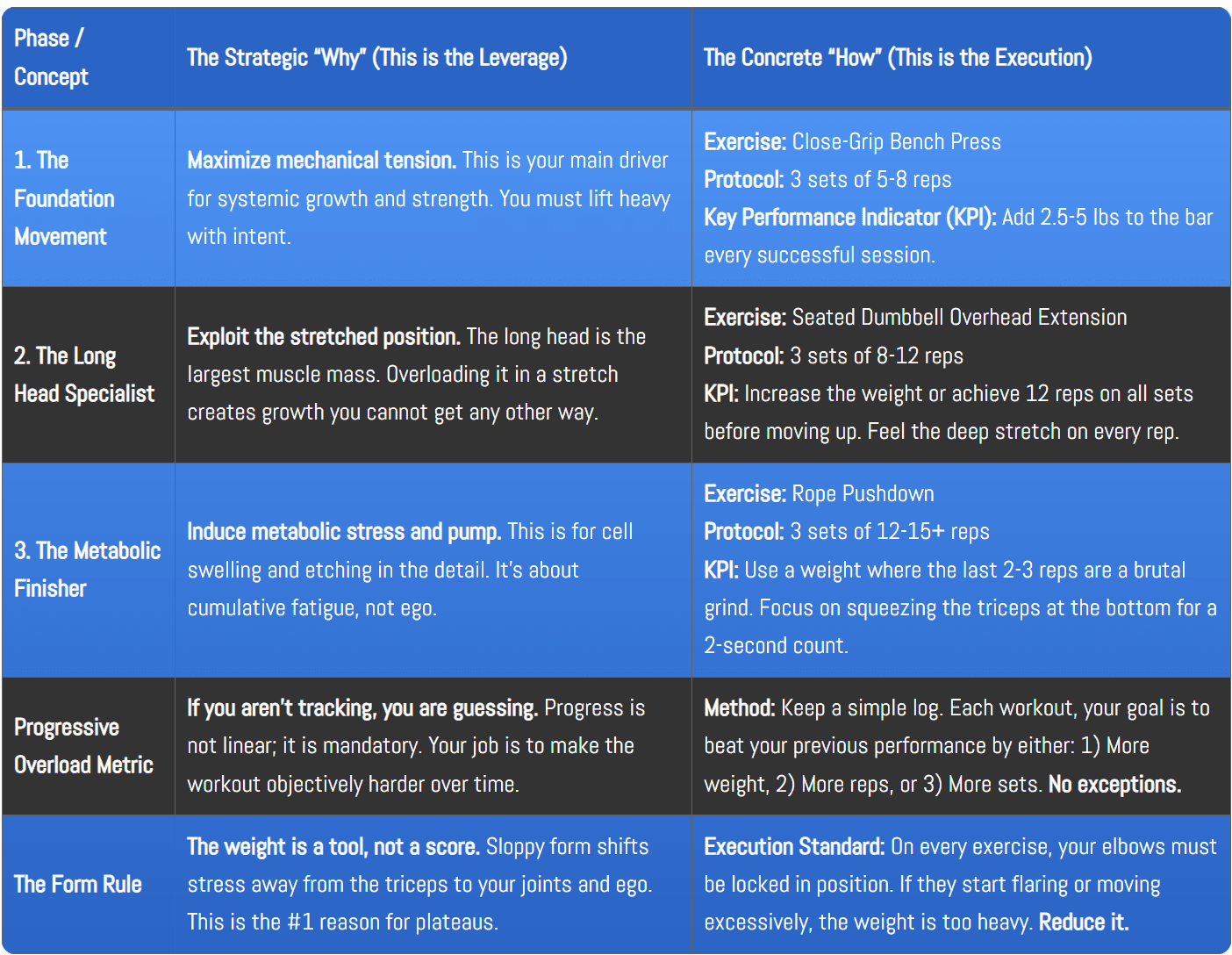
Stop guessing. This table breaks down the exact strategy to force your triceps to grow. This isn’t a list of “nice-to-do” exercises; it’s a systematic protocol. Execute it with disciplined consistency, track your numbers, and the results are inevitable.
Your Triceps Growth Execution Matrix (Download)
Beyond the Weight Room: The Recovery Equation
The muscle isn’t built in the gym; it’s built when you rest. Training breaks down the muscle fibers; protein synthesis and sleep rebuild them bigger and stronger. Without adequate recovery, you are simply spinning your wheels. The work you do under the barbell is the question; your recovery is the answer.
Your triceps are involved in every pressing movement. Overtraining is a real risk. For most, 2 dedicated triceps sessions per week, with at least 48-72 hours of rest in between, is the sustainable sweet spot for growth. Listen to your body—constant joint pain is a sign of poor form or excessive frequency.
This is the path to moving from guesswork to mastery. It’s about understanding the instrument you are playing. Apply this knowledge, focus on the nuance, and you will command the change you’re looking for.